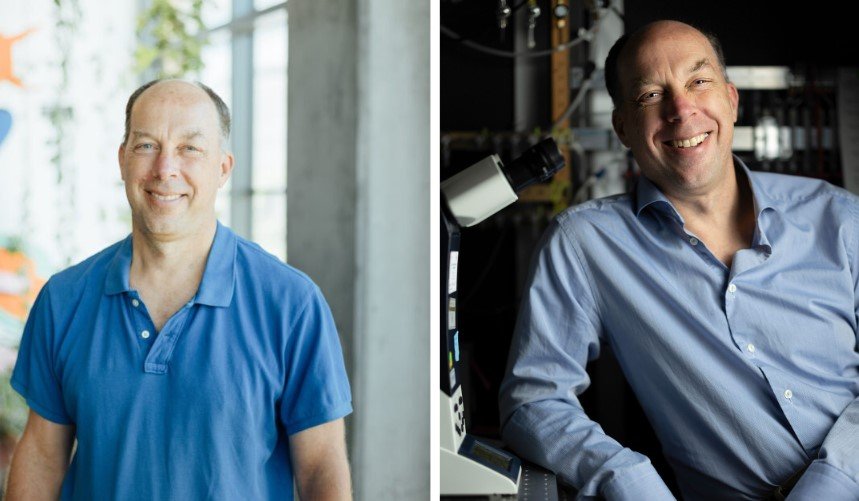
Stephen Quake is an American physicist, bioengineer, professor, and inventor whose research has helped change how scientists study cells, genes, and human health. His work brings together physics, engineering, biology, and medicine to solve problems that traditional laboratory methods often struggle to address.
From developing miniature fluid-handling systems to advancing DNA sequencing, Quake has created technologies that make complex biological research faster and more precise. One of his most significant contributions is his role in developing non-invasive prenatal testing, which uses a mother’s blood to identify certain chromosomal conditions during pregnancy. His inventions have also helped researchers investigate individual cells and understand biological systems at a much smaller scale. Beyond academic research, Quake has helped establish scientific companies and held leadership positions in major research organizations.
His career offers an example of how ideas from physics can lead to practical advances in medicine and biotechnology.
Quick Bio
| Detail | Information |
|---|---|
| Full Name | Stephen R. Quake |
| Known For | Microfluidics, single-cell genomics, DNA sequencing, and medical diagnostics |
| Famous Connection | American physicist and inventor |
| Relationship | Professional identity and scientific field |
| Profession | Physicist, bioengineer, professor, researcher, and inventor |
| Birth Date | Not reliably documented in authoritative public sources |
| Birthplace | Not reliably documented in authoritative public sources |
| Nationality | American |
| Children | Not reliably documented in authoritative public sources |
| Education | B.S. in Physics and M.S. in Mathematics from Stanford University; doctorate in Theoretical Physics from the University of Oxford |
| Current/Public Status | Stanford professor and scientific leader; joined the Institute for Protein Innovation board in 2026 |
Who Is Stephen Quake?
Stephen Quake is a scientist whose career has developed around one central idea: making it possible to observe, measure, and understand biological processes with greater precision. Although he began with formal training in physics, his research gradually expanded into bioengineering, molecular biology, genetics, and medical technology.
He is particularly recognized for pioneering microfluidic systems, which allow researchers to control extremely small amounts of liquid inside specially designed devices. These systems can perform complicated laboratory operations on tiny chips, reducing the amount of material required and allowing many experiments to take place at once.
Quake has also contributed to DNA sequencing and the development of genetic diagnostic methods. His work has earned recognition from scientific institutions, including the National Academy of Sciences, the National Academy of Engineering, and the National Academy of Medicine. He was also elected to the National Academy of Inventors.
His career is notable because it extends beyond publishing scientific research. Quake has helped turn laboratory discoveries into technologies and businesses that can be used in research and healthcare.
Stephen Quake’s Education and Academic Foundations
Quake’s academic background combines mathematics and physics, two disciplines that provide powerful ways to understand complex systems. He completed a Bachelor of Science in Physics and a Master of Science in Mathematics at Stanford University in 1991.
He continued his studies at the University of Oxford, where he earned a doctorate in Theoretical Physics in 1994. This training gave him a foundation in mathematical modelling, physical systems, and experimental thinking.
Rather than limiting his career to traditional physics, Quake applied those skills to biological questions. Living cells are complicated systems, and studying them requires instruments capable of measuring extremely small changes. His understanding of physical principles helped him approach these challenges from a different direction.
This interdisciplinary approach became a defining feature of his research. Instead of treating biology and physics as separate areas, he used engineering and physical science to develop new ways of investigating living organisms.
From Physics to the Science of Living Cells
Quake’s move into biological research reflects a broader change in modern science. Researchers increasingly need tools that can connect physical measurements with information about genes, proteins, and cellular behaviour.
At the California Institute of Technology, where he joined the faculty in 1996, Quake developed research at the intersection of applied physics and biology. His work explored how small-scale devices could help scientists perform experiments that were difficult or inefficient using conventional laboratory equipment.
He later became a professor at Stanford University, where his academic work continued to connect bioengineering and applied physics. His research interests have included single-molecule biophysics, precision force measurement, micro- and nanofabrication, and biological automation.
These areas may sound highly specialized, but their applications are significant. Better measurement tools can help scientists understand diseases, investigate how cells function, and develop more effective approaches to medical testing.
The Microfluidics Innovation That Changed Laboratory Research
One of Stephen Quake’s most important achievements is his work on microfluidic large-scale integration. Microfluidics involves controlling tiny quantities of liquids through very small channels and chambers built into a device.
Traditional laboratory experiments often depend on separate instruments, manual handling, and comparatively large quantities of samples. Microfluidic technology can bring several operations together on a compact chip.
Quake helped develop systems containing thousands of integrated micromechanical valves. These valves control the movement of liquids through miniature channels, allowing researchers to perform many operations within a single device.
The idea is sometimes compared with electronic integrated circuits. Just as electronic circuits organize numerous components on a small chip, microfluidic systems organize fluid-handling components to carry out complex biological procedures.
This technology has made it possible to conduct large numbers of experiments while using much smaller quantities of samples and reagents. It has also supported research involving individual cells, proteins, and genetic material.
The American Academy of Arts and Sciences has recognized Quake as a pioneer in microfluidics and single-molecule biophysics, highlighting the significance of his work in the development of these systems.
How Stephen Quake Helped Advance DNA Sequencing
DNA sequencing allows scientists to determine the order of genetic information within a DNA molecule. It is an essential technique in modern biology because genetic sequences can reveal information about inherited traits, diseases, and the relationships between organisms.
Quake contributed to the development of new sequencing technologies designed to make genetic analysis more efficient. His research helped advance methods for examining individual DNA molecules and studying genetic material at a more detailed level.
His work in this area also connected with microfluidics. By combining miniature laboratory systems with genetic analysis, researchers gained new ways to process biological samples and investigate complex genetic information.
These developments contributed to the wider progress of genomics, particularly research involving individual cells. Studying cells separately can reveal differences that might disappear when scientists examine a large mixed sample.
Quake’s contributions helped establish technological foundations for research into single-cell genomics and more detailed analysis of biological systems.
The Medical Breakthrough Behind Non-Invasive Prenatal Testing
One of the most widely recognized applications of Quake’s research is non-invasive prenatal testing. This approach examines genetic material circulating in a pregnant woman’s blood to identify certain chromosomal abnormalities in a developing fetus.
Historically, prenatal diagnosis of some genetic conditions could require invasive procedures. Although these tests can provide important information, invasive sampling methods carry risks that must be carefully considered.
Quake and his research collaborators helped demonstrate how DNA sequencing could be used to detect fetal chromosomal conditions through a maternal blood sample. Their work showed that cell-free DNA in maternal plasma could provide useful information about fetal genetic material.
A major scientific paper published in 2008 demonstrated the potential of high-throughput sequencing to identify conditions including trisomy 21, trisomy 18, and trisomy 13.
This research became part of the scientific foundation for non-invasive prenatal screening and diagnosis. It is important, however, to distinguish between screening and definitive diagnosis: a positive screening result may require further medical assessment.
The development of this approach illustrates how Quake’s interest in measurement technology moved beyond laboratory research and into a field with direct implications for healthcare.
Stephen Quake’s Companies and Scientific Entrepreneurship
Quake’s career has not been limited to universities and research laboratories. He has also helped commercialize scientific inventions by becoming involved in biotechnology companies.
He co-founded Fluidigm Corporation, a company associated with microfluidic technology and systems for biological research. The company’s work helped bring advanced fluid-handling platforms into laboratories and supported applications involving genomics and cellular analysis.
Quake was also a founder and shareholder of Helicos BioSciences, a company involved in DNA sequencing technology. His scientific interests in examining individual DNA molecules were closely connected to the development of new sequencing approaches.
He was also associated with Verinata Health, a company working in prenatal genetic testing. This connection reflected the growing commercial importance of non-invasive methods for examining fetal chromosomal conditions.
These ventures demonstrate an important part of Quake’s professional identity: he has worked to move scientific ideas from research settings toward practical applications. His career shows how academic discoveries can contribute to new products, companies, and medical technologies.
Who Is the American Physicist and Inventor?
An American physicist and inventor applies scientific principles to understand the physical world and create tools, systems, or technologies that solve practical problems. Stephen Quake fits this description through his work in applied physics, bioengineering, and medical innovation.
His achievements are particularly notable because they cross traditional academic boundaries. Physics provides methods for understanding forces, motion, and measurement. Engineering turns those principles into working devices. Biology and medicine provide the problems that these technologies can help address.
Quake’s inventions have included microfluidic systems, sequencing technologies, and diagnostic approaches. Rather than focusing on a single type of machine, his work has addressed several connected challenges: how to handle biological samples, how to examine genetic information, and how to make certain medical tests less invasive.
His professional identity therefore extends beyond the conventional image of a physicist working with physical matter alone. He has used physics as a foundation for developing tools that help researchers study life itself.
Major Awards and Scientific Recognition
Quake’s contributions have earned recognition from major scientific and educational organizations. One of his most prominent honours was the 2012 Lemelson-MIT Prize, which included a $500,000 award.
The prize recognized his inventions and their potential to improve personalized medicine, drug discovery, genome analysis, and non-invasive diagnostics. The recognition also reflected his ability to connect scientific discoveries with practical applications.
He has received other honours, including the Max Delbrück Prize in Biological Physics and the Raymond and Beverly Sackler Prize for Convergence Research. His election to several national academies further reflects the range of his work.
These distinctions are significant because they recognize contributions across multiple fields rather than achievements within only one scientific specialty.
His Work With the Chan Zuckerberg Initiative and Biohub
Another important chapter in Quake’s career involved scientific leadership and research infrastructure. He became a founding co-president of the Chan Zuckerberg Biohub in 2016, an organization created to support collaborative research into biology and disease.
The Biohub brought together scientists and engineers to develop tools and investigate fundamental questions about living systems. Its work has included efforts to understand cells, build biological maps, and improve technologies used in biomedical research.
Quake later took on a broader leadership role as Head of Science at the Chan Zuckerberg Initiative. In that position, he oversaw science programs, technology development, and the Biohub network.
This work expanded his influence beyond his own laboratory. It placed him in a position to support research teams, encourage collaboration, and help shape the direction of scientific projects.
In 2026, the Institute for Protein Innovation announced that Quake had joined its board. The announcement also described his return to full-time work in his Stanford laboratory, marking another development in his continuing scientific career.
Stephen Quake’s Research Interests Today
Quake’s research interests have continued to focus on understanding biological systems through advanced measurement and technology. His work has included single-molecule biophysics, integrated microfluidics, precision force measurement, and large-scale biological automation.
Single-molecule research is particularly important because biological samples often contain enormous numbers of molecules. Studying them individually can reveal details that become harder to identify when researchers examine an entire population at once.
His interest in cell-level analysis also connects with the development of cell atlases. These projects aim to identify and organize the different types of cells found in tissues and organisms, helping researchers understand how biological systems are structured.
Quake’s research combines the development of new instruments with the scientific questions those instruments make possible. This approach keeps engineering and discovery closely connected.
Personal Life, Family, and Public Information
Compared with his professional achievements, Stephen Quake’s personal life receives relatively little attention in authoritative public biographies.
His academic and institutional profiles focus primarily on his education, research, inventions, awards, and leadership positions. They do not provide a consistently documented account of his family background, spouse, or children.
For that reason, details about his private relationships should not be treated as established facts without reliable confirmation. His public profile is primarily that of a scientist and inventor whose work has influenced research and medical technology.
Stephen Quake’s Net Worth and Financial Life
Stephen Quake’s exact net worth is not reliably established in authoritative public sources. Although he has been involved in biotechnology companies and has received substantial professional recognition, these facts do not provide a verified measure of his personal wealth.
His association with companies such as Fluidigm and Helicos BioSciences does not automatically reveal the value of his current assets. Company valuations, historical shareholdings, research awards, and personal net worth are different financial measures.
The Lemelson-MIT Prize included a $500,000 award in 2012, but that amount should not be confused with his overall wealth. Without verified financial disclosures, assigning him a specific net worth would be speculative.
Why Stephen Quake’s Scientific Contributions Matter
Quake’s career demonstrates how one discipline can help advance another. His education in physics and mathematics gave him the tools to approach biological problems through measurement, modelling, and engineering.
His microfluidic systems helped make complex laboratory procedures more compact and automated. His sequencing research contributed to the development of more detailed genetic analysis. His work on prenatal testing helped establish an approach that can examine fetal genetic information through maternal blood.
These achievements matter because they address practical limitations in science and medicine. Better instruments can reduce sample requirements, improve experimental efficiency, and reveal biological details that were previously difficult to measure.
His influence is also reflected in the companies, research organizations, and scientific collaborations connected to his work. Rather than being defined by one invention, Quake’s career is built around a continuing effort to develop better ways of studying living systems.
Conclusion
Stephen Quake has built a distinctive career by bringing physics, engineering, and biology together. His contributions to microfluidics, DNA sequencing, and non-invasive prenatal testing have helped change how scientists investigate cells and genetic information.
His work as a professor, inventor, entrepreneur, and scientific leader demonstrates the value of interdisciplinary research. From developing miniature laboratory systems to supporting large-scale biological research, he has helped turn complex scientific ideas into useful technologies.
Although his private life and personal finances are not extensively documented, his professional achievements are well established. Stephen Quake’s story is ultimately one of scientific curiosity, practical invention, and the pursuit of better tools for understanding human biology.
FAQs
Who is Stephen Quake?
Stephen Quake is an American physicist, bioengineer, professor, and inventor. He is recognized for pioneering microfluidic technology, advancing DNA sequencing, and contributing to non-invasive prenatal testing.
What is Stephen Quake famous for?
He is particularly known for developing microfluidic large-scale integration and helping advance genetic testing methods. His research has influenced biological research, genomics, and medical diagnostics.
Where did Stephen Quake study?
Quake earned a bachelor’s degree in physics and a master’s degree in mathematics from Stanford University in 1991. He completed a doctorate in theoretical physics at the University of Oxford in 1994.
What did Stephen Quake invent?
His inventions and research contributions include advanced microfluidic systems, DNA sequencing technologies, and diagnostic methods. His work helped make it possible to conduct complex biological experiments on miniature devices.
Did Stephen Quake help develop non-invasive prenatal testing?
Yes. Quake and his collaborators contributed to research demonstrating that DNA sequencing of cell-free DNA in maternal blood could identify certain fetal chromosomal abnormalities. This research helped establish an important scientific foundation for non-invasive prenatal testing.
What awards has Stephen Quake received?
Among his major honours is the 2012 Lemelson-MIT Prize. He has also received the Max Delbrück Prize in Biological Physics and the Raymond and Beverly Sackler Prize for Convergence Research.
What is Stephen Quake’s net worth?
His current personal net worth is not reliably documented in authoritative public sources. His involvement in biotechnology companies and receipt of research awards do not establish a verified personal wealth figure.
For More Updates Visit: Magazineology