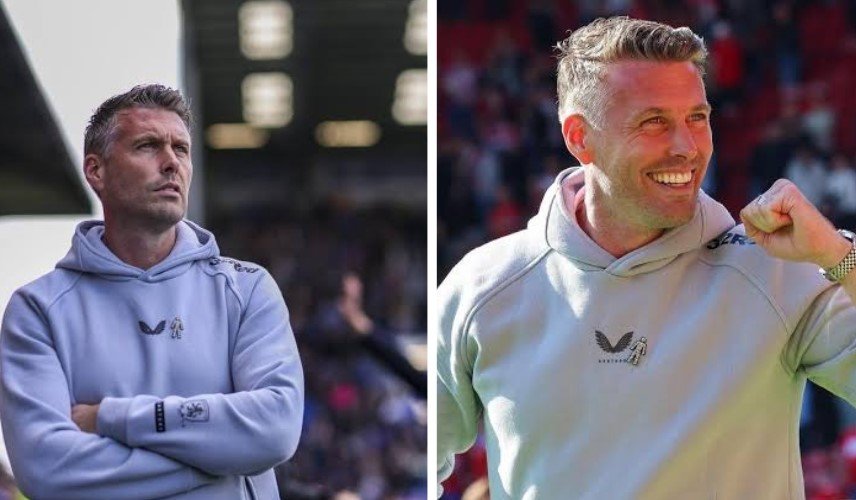
Rob Edwards has built a reputation as a football manager through a career shaped by determination, coaching experience and several significant promotion campaigns. Born in Telford, England, he represented Wales as a professional footballer before moving into management. His journey has taken him from youth coaching and lower-league football to the Premier League touchline. Edwards achieved major recognition by guiding Forest Green Rovers to the League Two title and leading Luton Town into the Premier League in 2023. He later managed Watford and Middlesbrough before returning to Wolverhampton Wanderers as head coach in November 2025. Although his second spell at Wolves ended in June 2026, his career remains an interesting example of how a former professional player can develop into a senior football manager.
Quick Bio
| Detail | Information |
|---|---|
| Full Name | Robert Owen Edwards |
| Known For | Managing Luton Town, Forest Green Rovers, Middlesbrough and Wolverhampton Wanderers |
| Famous Connection | English and Welsh professional football |
| Relationship | Professional identity as a football manager |
| Profession | Football manager and former professional footballer |
| Birth Date | 25 December 1982 |
| Birthplace | Telford, England |
| Nationality | Welsh football international; born in England |
| Playing Position | Centre-back |
| International Career | Wales, 15 senior appearances |
| Education | Not reliably documented in authoritative public sources |
| Current/Public Status | Left Wolverhampton Wanderers in June 2026 |
Who Is Rob Edwards?

Rob Edwards is a professional football manager and former defender who has worked across several levels of English football. His career includes coaching roles with Wolverhampton Wanderers and the Football Association, as well as senior management positions at AFC Telford United, Forest Green Rovers, Watford, Luton Town and Middlesbrough.
Before becoming a manager, Edwards played for clubs including Aston Villa, Wolves, Blackpool and Barnsley. He also represented Wales at international level, earning 15 senior caps.
His transition from playing to coaching gave him experience in different parts of the game. Rather than moving directly into a high-profile management position, he developed through academy football, youth coaching and lower-league management.
Early Life and Football Beginnings
Rob Edwards was born on 25 December 1982 in Telford, England. Football became the central part of his professional life at a young age, and he began his senior playing career with Aston Villa.
As a defender, he developed experience in competitive English football and eventually earned opportunities at international level. His performances helped him establish himself as a centre-back capable of playing in different defensive systems.
Although injuries affected parts of his playing career, Edwards continued to build experience through several clubs. Those years later provided a foundation for his understanding of team organisation, preparation and player development.
Rob Edwards’ Career as a Professional Footballer
Edwards began his senior career at Aston Villa, where he made nine first-team appearances. He subsequently joined Wolverhampton Wanderers in 2004 and spent four seasons with the club.
At Wolves, he became a regular part of the defensive setup, making more than 100 appearances. His time at Molineux would eventually become important again when he returned to the club in coaching and management roles.
He also played for Blackpool, Norwich City and Barnsley. His career included involvement in promotion campaigns, including Blackpool’s successful Championship play-off season in 2010.
International football was another important part of his playing journey. Although born in England, Edwards represented Wales and collected 15 senior appearances for the national team.
He retired from professional football in 2013 after injuries made it difficult to continue playing.
How Rob Edwards Moved Into Football Management
Retirement did not take Edwards away from football. Instead, he began developing his coaching career, initially working within Wolverhampton Wanderers’ academy.
He coached young players before progressing into first-team coaching responsibilities. In October 2016, he briefly took charge of Wolves as interim manager, overseeing two matches.
That experience introduced him to senior management, but his next steps involved gaining responsibility at other levels. He became manager of AFC Telford United in 2017 and later returned to Wolves to work with the club’s under-23 team.
His work with young players helped establish his reputation as a developing coach. Edwards also gained experience with the Football Association, working with England’s under-20 and under-16 teams.
These positions gave him a broader understanding of coaching methods, tactical preparation and the development of young footballers.
AFC Telford United and the First Senior Management Challenge
Edwards took charge of AFC Telford United in 2017. The National League North club gave him an opportunity to experience the demands of managing a senior team over a full season.
The role involved more than selecting a starting eleven. He had to manage training, organise the squad, prepare for opponents and handle the pressures that come with results.
Although his time at Telford did not produce a major promotion achievement, it gave him valuable experience outside the academy environment. His next coaching positions would build on that foundation.
Forest Green Rovers: A Major Career Breakthrough
In May 2021, Forest Green Rovers appointed Edwards as head coach. The club had ambitions of progressing from League Two, and his appointment marked an important stage in his development.
Edwards made a strong start. His team produced consistent performances throughout the 2021–22 campaign, combining attacking intent with an organised approach.
Forest Green eventually won the League Two title and secured promotion to League One for the first time in the club’s history. The achievement became one of the defining moments of Edwards’ managerial career.
His work was recognised with the EFL League Two Manager of the Season award. He also received several monthly managerial awards during the campaign.
The promotion established him as a manager capable of leading a team through a demanding league season and achieving a clear sporting objective.
The Watford Experience
Following his success with Forest Green, Edwards moved to Watford in 2022. The appointment offered a chance to manage in the Championship, where expectations and competition were considerably higher.
However, his time at Vicarage Road was brief. Watford made a managerial change in September 2022 after just 11 matches under his leadership.
Although the spell did not develop as expected, it became another important experience in his career. Football management often involves difficult transitions, and Edwards soon received another opportunity.
Luton Town and the Historic Premier League Promotion
Edwards’ appointment at Luton Town in November 2022 became the turning point that brought him national recognition.
Luton were competing in the Championship and aiming to challenge for promotion. Edwards quickly helped establish a competitive side, and the team developed the consistency needed to remain in the promotion race.
Luton finished third in the 2022–23 Championship season and reached the play-offs. Their campaign culminated in a dramatic final against Coventry City at Wembley Stadium.
The match ended in a penalty shootout, with Luton securing promotion to the Premier League. It was a historic achievement because the club had never previously played in the competition.
For Edwards, the victory represented his second major promotion success as a manager. It also confirmed his ability to lead a club with more modest resources into English football’s top division.
Managing Luton in the Premier League
The 2023–24 season presented Edwards with a different challenge. Luton entered the Premier League with a squad that had limited experience at that level, while facing clubs with substantially greater financial resources and established top-flight players.
His team approached the campaign with energy and attacking ambition. Luton scored 52 league goals, demonstrating that they could create opportunities against stronger opponents.
Despite some memorable performances, the club finished 18th and were relegated after one season. Their survival hopes remained alive until the final day of the campaign.
Edwards stayed in charge after relegation and attempted to guide Luton back towards the Premier League. However, the following Championship season proved difficult. The club dismissed him in January 2025 while sitting near the bottom of the table.
His time at Luton therefore included both one of the greatest achievements in the club’s modern history and the disappointment of two consecutive relegation battles.
Who Is Luton Town?
Luton Town is an English professional football club based in Luton, Bedfordshire. The team plays its home matches at Kenilworth Road and has a long history in the English football league system.
The club attracted widespread attention during the 2022–23 season when it won promotion to the Premier League through the Championship play-offs. Edwards played a central role in that achievement.
His connection with Luton remains one of the most important parts of his managerial story because he helped deliver a promotion that supporters had waited decades to experience.
Rob Edwards at Middlesbrough
After leaving Luton, Edwards returned to management with Middlesbrough in June 2025. The club appointed him as head coach on a three-year contract, replacing Michael Carrick.
His start was encouraging. Middlesbrough won their opening four Championship matches of the 2025–26 season, and Edwards received the Championship Manager of the Month award for August 2025.
The team remained competitive during his short spell, and he left the club in November with Middlesbrough in second place in the Championship.
His departure came after Wolverhampton Wanderers offered him the opportunity to return to a club that had played a major role in both his playing and coaching development.
Wolverhampton Wanderers: A Return to Familiar Ground
Wolves appointed Edwards as head coach on 12 November 2025. The move brought his professional journey full circle because he had previously represented the club as a player, coached within its academy and worked with the senior team.
His appointment also marked a significant step in his managerial career. He returned to Molineux with experience of promotion campaigns and Premier League management.
However, the 2025–26 season proved extremely challenging. Wolves struggled to collect points and were relegated from the Premier League in April 2026. The club eventually finished bottom of the table with 20 points from 38 matches.
Wolves dismissed Edwards on 11 June 2026 after reviewing the club’s football operations and disappointing season. His departure ended a second spell at the club that had lasted around seven months.
The experience was a difficult contrast to his earlier achievements, but it also highlighted the different pressures involved in managing a team fighting for survival at the highest level.
Rob Edwards’ Managerial Style and Football Philosophy
Edwards’ teams have often been associated with organised defending, energetic pressing and a willingness to play forward when opportunities appear. His approach has also reflected the importance of team discipline and collective effort.
His experience as a centre-back may have influenced his understanding of defensive structure, although his coaching career has involved more than one tactical system.
At Forest Green, he managed a team that successfully competed for promotion. At Luton, he helped build a side capable of challenging Championship opponents before adapting to the Premier League.
His managerial work shows an ability to operate in different environments. However, results at Watford and Wolves also demonstrate that success is never guaranteed, particularly when expectations, squad quality and club circumstances change.
Major Achievements in Rob Edwards’ Career
Several milestones stand out when reviewing Edwards’ career:
- League Two champion: Guided Forest Green Rovers to the 2021–22 League Two title.
- Manager of the Season: Named EFL League Two Manager of the Season for 2021–22.
- Premier League promotion: Led Luton Town to the top flight through the 2023 Championship play-offs.
- Premier League experience: Managed Luton during the 2023–24 top-flight campaign.
- Championship recognition: Won the August 2025 Championship Manager of the Month award with Middlesbrough.
- Return to Wolves: Appointed head coach of Wolverhampton Wanderers in November 2025.
Together, these achievements show the range of experiences that have shaped his career.
Rob Edwards’ Personal Life and Family
Rob Edwards generally keeps his private life away from the public spotlight. Most reliable public information about him focuses on his football career, coaching work and professional appointments.
Details about his family, children and personal relationships are not widely documented in authoritative public sources. For that reason, it is better not to repeat unverified claims about his private circumstances.
His public identity remains closely connected to football, particularly his development from a professional defender into a manager responsible for senior teams.
Rob Edwards’ Net Worth and Financial Life
A verified figure for Rob Edwards’ current net worth is not publicly established. Online estimates should be treated cautiously because they rarely provide reliable documentation of a manager’s salary, investments, property or other financial assets.
His professional earnings have included income from playing contracts, coaching positions and managerial appointments. However, without confirmed financial records, assigning him a specific net worth would be speculative.
Conclusion
Rob Edwards’ career has included significant achievements, difficult setbacks and opportunities at some of English football’s most recognisable clubs. From his playing days with Wolves and his international appearances for Wales to his managerial success with Forest Green Rovers and Luton Town, he has developed through several stages of the professional game.
His promotion with Luton remains a defining achievement, while his League Two title with Forest Green demonstrated his ability to build a successful team. Later spells at Middlesbrough and Wolves brought further challenges, with his second Wolves appointment ending in June 2026.
Although his next managerial destination is not established here, Rob Edwards has already built a career shaped by experience at different levels of English football.
FAQs
Who is Rob Edwards?
Rob Edwards is a Welsh football manager and former professional defender. He has managed clubs including Forest Green Rovers, Watford, Luton Town, Middlesbrough and Wolverhampton Wanderers.
How old is Rob Edwards?
Rob Edwards was born on 25 December 1982. As of November 2026, he is 43 years old.
What is Rob Edwards famous for?
He is particularly recognised for guiding Forest Green Rovers to the 2021–22 League Two title and leading Luton Town to the Premier League in 2023.
Did Rob Edwards play professional football?
Yes. He played as a centre-back for Aston Villa, Wolverhampton Wanderers, Blackpool, Norwich City and Barnsley. He also represented Wales at senior international level, earning 15 caps.
Did Rob Edwards manage Wolverhampton Wanderers?
Yes. Edwards briefly served as Wolves’ interim manager in 2016 before returning as head coach in November 2025. The club dismissed him in June 2026 following its relegation from the Premier League.
Why did Rob Edwards leave Luton Town?
Luton Town and Edwards parted ways in January 2025 after a difficult Championship campaign. The club was near the bottom of the table when his departure was announced.
What is Rob Edwards’ net worth?
His verified current net worth has not been publicly confirmed. Figures published by unofficial online sources should not be treated as established financial information.
For More Updates Visit : Magazineology