
Jeff Bezos has transformed an online bookstore into one of the world’s most influential technology and retail businesses, building an extraordinary personal fortune along the way. As the founder of Amazon and its executive chair, Bezos remains one of the wealthiest people on the planet. The estimated Jeff Bezos net worth fluctuates with financial markets, company valuations, and his investments in businesses beyond online shopping. His wealth also reflects his interests in space exploration, media ownership, and philanthropy. From his early career in finance to Amazon’s global expansion, his journey demonstrates how long-term business decisions can create enormous value. Understanding his fortune requires looking beyond a single billionaire ranking to examine the assets, companies, and investments behind it.
Quick Bio
| Detail | Information |
|---|---|
| Full Name | Jeffrey Preston Bezos |
| Known For | Founding Amazon and investing in space exploration |
| Profession | American businessman, entrepreneur, and investor |
| Famous Connection | Founder and executive chair of Amazon |
| Date of Birth | January 12, 1964 |
| Birthplace | Albuquerque, New Mexico, United States |
| Nationality | American |
| Education | Princeton University; graduated in 1986 |
| Children | Four |
| Marital Status | Engaged to Lauren Sánchez, according to Forbes’ profile |
| Main Source of Wealth | Amazon ownership and other investments |
| Estimated Net Worth | Approximately $381 billion, according to Forbes’ real-time estimate on October 21, 2026 |
| Current Public Role | Executive chair of Amazon |
Who Is Jeff Bezos? The Entrepreneur Behind One of the World’s Largest Fortunes
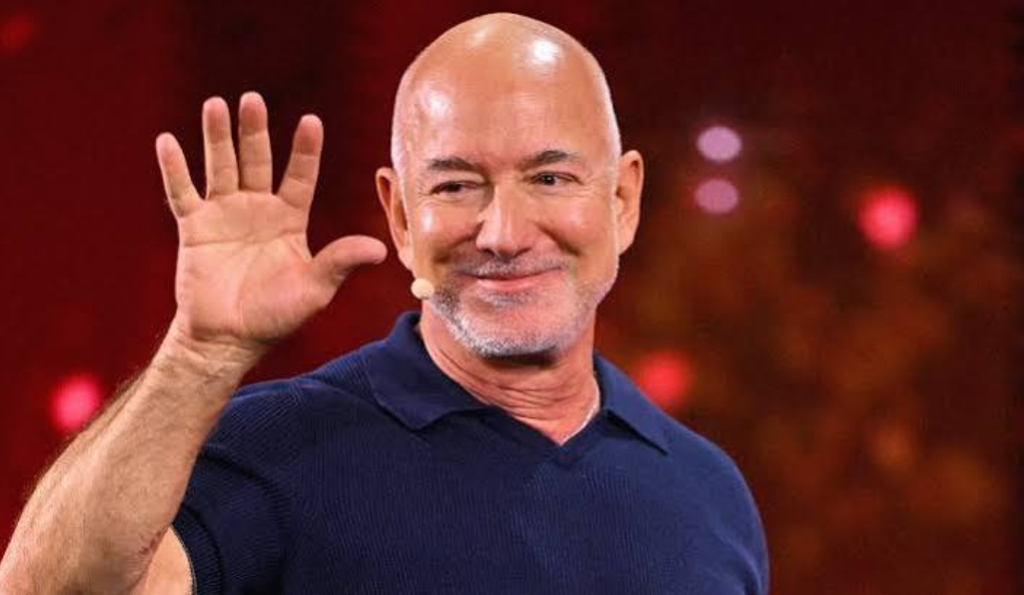
Jeff Bezos is an American entrepreneur who changed how people shop, consume digital media, and access computing services. He founded Amazon in 1994, initially building the business around online book sales. Over time, the company expanded into a global marketplace, cloud computing, digital entertainment, and consumer technology.
His fortune grew alongside Amazon’s expansion. Rather than relying on a traditional salary, Bezos built much of his wealth through ownership in a business whose market value increased dramatically over several decades. His investments in aerospace, media, and other ventures later broadened his financial interests.
Bezos stepped down as Amazon’s chief executive in July 2021 and became executive chair. Although he no longer manages the company’s daily operations as CEO, his position and ownership interest keep Amazon central to his financial story.
Jeff Bezos Net Worth in 2026
As of October 21, 2026, Forbes’ real-time billionaire ranking estimates Jeff Bezos’s net worth at approximately $381 billion. That figure places him among the world’s richest individuals, although his position can change as asset values move.
$381 billion
Forbes real-time estimate; not a measure of cash held in bank accounts.
Amazon ownership
The central source of his accumulated wealth.
Blue Origin
His privately held aerospace business.
Other investments and assets
Additional business interests and personal investments.
The estimate should not be confused with spendable cash. Billionaire rankings generally calculate wealth by valuing shares, business interests, and other assets, then accounting for estimated liabilities where information is available. A change in a company’s share price can therefore move Bezos’s estimated wealth by billions of dollars without any equivalent cash payment to him.
How Jeff Bezos Built His Fortune
Bezos did not begin his career as the owner of a global technology company. After graduating from Princeton University in 1986 with degrees in electrical engineering and computer science, he worked in finance and technology-related roles. His experience in analytical work and business operations helped prepare him to launch his own venture.
In 1994, he founded Amazon, recognizing the potential of the growing internet. The company began by selling books online, a category that suited a digital store capable of offering a broad selection without the limitations of physical shelf space.
The business later expanded into electronics, household products, subscriptions, and cloud computing. Amazon Web Services became an important part of the company’s business model, serving organizations that need computing infrastructure and related services.
Bezos benefited from retaining a substantial ownership interest as Amazon grew. That distinction matters: his wealth largely reflects the value of assets he owns rather than the salary he receives for performing a job.
Amazon: The Biggest Influence on Jeff Bezos Net Worth
Amazon remains the defining business behind Bezos’s fortune. Its growth from a specialist online bookseller into an international commerce and technology company created significant value for shareholders, including its founder.
Several business areas helped shape Amazon’s expansion:
- Online retail: Amazon built a large marketplace for products sold directly by the company and third-party merchants.
- Amazon Web Services: Its cloud computing division supplies infrastructure and services to businesses, developers, and public-sector organizations.
- Subscriptions and digital entertainment: Prime memberships, streaming services, and related offerings created additional ways to attract and retain customers.
- Consumer technology: Products and services associated with Kindle, Echo, and Alexa broadened Amazon’s presence beyond its shopping website.
Bezos served as CEO for roughly 27 years before transitioning to the executive chair role in 2021. Forbes reported that he owned approximately 8% of Amazon in its 2026 profile, although ownership percentages can change with stock transactions and other corporate developments.
Amazon’s stock performance remains important when assessing Bezos’s fortune. When investors assign a higher value to Amazon, his stake can become more valuable. When the share price declines, his estimated wealth can fall even if the company’s underlying operations continue.
Does Jeff Bezos Keep His Fortune in Cash?
No. A net worth estimate of hundreds of billions of dollars does not mean Bezos has that amount sitting in cash or bank deposits.
A large portion of his wealth is associated with ownership stakes in businesses. Publicly traded shares can be valued using market prices, while interests in private companies require estimates based on available financial information, funding rounds, and other valuation methods.
Selling shares can generate cash, but large transactions may involve taxes, trading restrictions, and market effects. Bezos can also use assets to fund new ventures or philanthropic commitments without converting his entire fortune into cash.
The distinction between wealth and liquidity explains why a billionaire’s reported net worth can rise sharply even when they have not received a comparable amount of income. It also means that public rankings should be treated as estimates rather than exact statements of personal finances.
Blue Origin: Investing in Space Exploration
Bezos founded Blue Origin to develop technologies intended to make spaceflight safer and less expensive. The company’s work includes reusable rocket systems and commercial spaceflight, placing it in a sector that requires significant capital, long development periods, and complex engineering.
Blue Origin represents a different kind of business from Amazon. Amazon developed a large commercial operation serving customers and companies, while Blue Origin pursues aerospace technology with longer development cycles and substantial technical challenges.
The space company is also part of Bezos’s long-term business ambitions. Its value is not as straightforward to calculate as the market value of publicly traded Amazon shares. Private-company valuations can depend on financing events, investor assessments, and expectations about future performance.
Consequently, Blue Origin’s business value should not automatically be treated as cash belonging to Bezos. His personal net worth depends on the value of his ownership interest and other assets, not simply on the company’s headline valuation.
The Washington Post and His Media Investments
In 2013, Bezos purchased The Washington Post, a major American newspaper with a long history of political and investigative reporting. The acquisition added media ownership to a portfolio already dominated by technology and online commerce.
The newspaper operates in a different business environment from Amazon. News organizations must balance editorial work, subscriptions, advertising, and the financial demands of running a newsroom. Ownership of a media company can carry public influence, but it does not guarantee that the business will deliver returns comparable to those of a rapidly expanding technology company.
Bezos’s ownership of the newspaper also demonstrates that his interests extend beyond retail and technology. However, the value of the publication should be considered separately from his Amazon stake, and its estimated worth should not be added to his fortune without reliable valuation information.
Jeff Bezos’s Early Life and Education
Jeffrey Preston Bezos was born on January 12, 1964, in Albuquerque, New Mexico. His interest in science and technology developed early, and he later studied electrical engineering and computer science at Princeton University.
He graduated summa cum laude in 1986 and entered the financial sector before founding Amazon. His early professional experience gave him exposure to analytical thinking, business systems, and the demands of working in competitive industries.
His educational background is relevant to his entrepreneurial story, but it does not fully explain Amazon’s success. The company’s growth also depended on customer demand, technology, logistics, access to capital, and the ability to expand into new markets.
Bezos’s decision to leave a finance career and start an internet business became one of the most consequential turning points in his professional life.
Leadership Style and Business Philosophy
Bezos built Amazon around an emphasis on customer experience, long-term thinking, and experimentation. The company’s official leadership materials have historically emphasized customer obsession, ownership, invention, and a willingness to challenge established practices.
This approach supported expansion into new business areas, even when some projects required years of investment before they could produce substantial returns. Amazon’s development of cloud computing services is one example of how a business initially associated with online retail grew into a broader technology provider.
However, long-term growth strategies also involve risk. Large investments can fail, new markets can disappoint, and aggressive competition can reduce profitability. Bezos’s financial success does not mean every decision made under his leadership was guaranteed to work.
His record illustrates a central feature of entrepreneurship: significant wealth can emerge when a founder retains ownership in a business that successfully scales, but that outcome depends on many commercial and market conditions.
Philanthropy: How Bezos Uses His Wealth
Bezos has directed some of his resources toward environmental protection, education, and support for families experiencing homelessness. His philanthropic work provides another perspective on a fortune that extends far beyond personal spending.
Two major initiatives are the Bezos Earth Fund and the Bezos Day One Fund.
The Bezos Earth Fund focuses on protecting the natural world and supporting efforts to address climate change. Bezos announced a commitment of $10 billion to climate-related causes in 2020, with the intention of distributing the funding by 2030.
The Bezos Day One Fund supports organizations helping families experiencing homelessness and initiatives aimed at expanding access to early childhood education.
These commitments are significant, but pledged donations, money already distributed, and the value of a person’s remaining assets are different financial measures. Philanthropic commitments should not automatically be deducted from a current net worth estimate unless the relevant transactions have occurred and the estimate accounts for them.
Jeff Bezos’s Divorce and Its Financial Impact
Bezos’s divorce from MacKenzie Scott was an important event in the history of his personal wealth. The couple married in 1993, before Amazon became the global business it is today, and divorced in 2019 after approximately 25 years of marriage.
As part of their divorce settlement, Scott received a substantial portion of the couple’s Amazon shares. Forbes reported that Bezos transferred a quarter of his then-16% Amazon stake to her.
The settlement reduced his ownership percentage, but it did not end his connection with Amazon or remove him from the company’s leadership. His remaining stake continued to represent a major source of wealth as the company expanded.
The divorce also illustrates why billionaire wealth estimates must be considered over time. Ownership changes, stock sales, charitable donations, and other financial transactions can influence an individual’s net worth even when the underlying company continues to grow.
Personal Life, Family, and Public Image
Despite his public profile, Bezos does not share every aspect of his personal finances or family life. Public biographies report that he has four children with MacKenzie Scott, but detailed information about their private lives remains limited.
Bezos became engaged to Lauren Sánchez, a former journalist and pilot, after their relationship became public. His relationship and family life often attract media attention, although these details are separate from the business activities that primarily created his fortune.
He is also known for his interest in space exploration, technology, and long-term projects. His public appearances and business announcements frequently attract attention because of the scale of his investments and his position among the world’s wealthiest entrepreneurs.
A responsible profile should distinguish documented personal information from rumors about relationships, spending, or family decisions. Not every aspect of a billionaire’s private life is publicly confirmed, and speculation should not be treated as fact.
Real Estate and Luxury Assets
Bezos has been associated with substantial real estate holdings and high-value personal assets. His wealth has allowed him to acquire properties in major American markets, while his public profile has also drawn attention to luxury purchases.
However, a precise current inventory of his properties, their market values, and his other personal assets is not necessarily available in a single authoritative public record. Property estimates can vary by valuation date, and ownership structures may complicate the picture.
Real estate can contribute to a billionaire’s overall wealth, but the purchase price of a property does not establish its current market value. Similarly, the cost of a luxury asset does not reveal its present resale value or how it affects a person’s total financial position.
For these reasons, Amazon ownership and other business interests provide a more useful starting point for understanding Bezos’s fortune than unverified lists of expensive possessions.
What Could Influence Jeff Bezos Net Worth in the Future?
Several factors may influence Bezos’s estimated fortune in the coming years.
Amazon’s market performance: Changes in Amazon’s share price can significantly affect the estimated value of his ownership stake.
Blue Origin’s progress: Commercial spaceflight, reusable rockets, and new aerospace contracts may affect how investors and financial analysts value the private company.
Investment decisions: New ventures, asset sales, acquisitions, and changes in investment holdings can alter his financial position.
Philanthropic giving: Completed donations and future charitable contributions may reduce the assets he retains personally.
Market conditions: Interest rates, economic growth, investor confidence, and changes in technology-sector valuations can influence the prices assigned to his holdings.
No single factor guarantees that Bezos’s wealth will rise or fall. Even with an established business record, future financial estimates remain dependent on market performance and decisions that have yet to unfold.
How Jeff Bezos Compares With Other Billionaires
Bezos regularly appears near the top of global wealth rankings alongside entrepreneurs such as Elon Musk, Larry Ellison, Larry Page, and Sergey Brin. Their relative positions change as the market values their companies and investments differently.
The important distinction is that billionaire rankings measure estimated wealth, not annual income or the amount of money available for immediate spending.
Bezos’s fortune is closely linked to Amazon, while other entrepreneurs may depend more heavily on stakes in electric vehicles, aerospace, software, or other technology businesses. These differences help explain why rankings can change rapidly even when each individual retains significant ownership of successful companies.
For readers researching the world’s richest people, the most useful comparison considers the source of each fortune, the assets involved, and the date of the estimate rather than relying on a ranking alone.
Conclusion
Jeff Bezos built his extraordinary fortune by founding Amazon and retaining a substantial ownership interest as the company expanded into a global commerce and technology business. His investments in Blue Origin, ownership of The Washington Post, and philanthropic initiatives demonstrate that his interests extend beyond online retail.
As of October 21, 2026, Forbes estimates Jeff Bezos net worth at approximately $381 billion. That figure represents an estimated value of his assets and business interests, not cash held in a bank account, and it can change with market conditions.
His financial story ultimately rests on the long-term growth of businesses, the value of ownership, and decisions about how to invest and distribute wealth. Understanding those factors provides a clearer picture of how Bezos accumulated his fortune and why his estimated net worth continues to attract worldwide interest.
FAQs
What is Jeff Bezos net worth in 2026?
Forbes estimated Jeff Bezos’s net worth at approximately $381 billion on October 21, 2026. The figure fluctuates with market conditions and changes in the estimated value of his assets.
How did Jeff Bezos become so rich?
Bezos founded Amazon in 1994 and retained an ownership stake as the company expanded from online bookselling into retail, cloud computing, subscriptions, and other technology services. The growth in the value of that stake became the principal driver of his fortune.
Does Jeff Bezos still own Amazon?
Yes. Bezos retains an ownership interest in Amazon and serves as its executive chair. He stepped down as CEO in 2021 but remains connected to the company’s leadership.
Does Jeff Bezos own Blue Origin?
Yes. Bezos founded Blue Origin, a private aerospace company focused on spaceflight technology. The value of his interest in the company is distinct from Amazon’s publicly traded market value.
Is Jeff Bezos a trillionaire?
No. Based on Forbes’ October 21, 2026, estimate of approximately $381 billion, Bezos has not reached a trillion-dollar net worth. His wealth remains below that threshold.
How much money does Jeff Bezos make per year?
There is no single annual income figure that captures Bezos’s total financial gains. Changes in stock prices, investment returns, asset sales, and compensation can affect his finances differently from year to year.
Did Jeff Bezos lose money after his divorce?
His divorce settlement transferred a substantial portion of his Amazon shares to MacKenzie Scott, reducing his ownership stake. However, the value of his remaining assets continued to fluctuate with Amazon’s performance and his other investments.
For More Updates Visit : Magazineology